Download Ebook The Churches The Apostles Left Behind
As related to this referred book, you might have known why this publication is awaited. But, for you who are still curious of the factors, you will certainly realize he reasons when you begin to review guide. Checking out the cover of The Churches The Apostles Left Behind as well as review title will lead you know why lots of people falling in love. Keen on guide that pertaining to the subject you are searching for could make you feel satisfied. This is exactly what will make you load that desire.
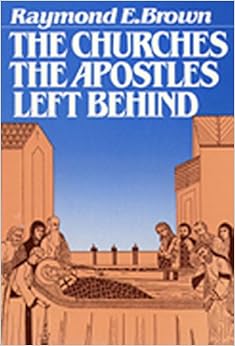
The Churches The Apostles Left Behind

Download Ebook The Churches The Apostles Left Behind
A book sometime serves as device to communicate much better and smarter with other. A publication will certainly also serve as a standard and also guidance of you to do something. A book will entail countless experience and understanding to share to the others. This is only some of the benefits of a book. But, how is the method to get those benefits? Obviously, the book will certainly give their benefit if you read them. So, a book does not need to only show on the shelves or overdo the table. They should read.
Reviewing will certainly not give you many points. Yet, reading will certainly give just what you need. Every book has certain topic and also lesson to take. It will make everyone need to select just what publication they will certainly read. It makes the lesson to take will truly associate with exactly how the person requires. In this case, the presence of this internet site will actually aid readers to locate lots of books. So, in fact, there is not only the The Churches The Apostles Left Behind, there are still lots of sort of guides to collect.
When obtaining the book The Churches The Apostles Left Behind by on the internet, you can read them wherever you are. Yeah, also you are in the train, bus, waiting checklist, or various other areas, on-line publication The Churches The Apostles Left Behind can be your good close friend. Each time is a great time to review. It will boost your understanding, enjoyable, enjoyable, lesson, as well as encounter without spending even more cash. This is why on the internet publication The Churches The Apostles Left Behind becomes most really wanted.
Based upon this problem, to assist you we will show you some ways. You can take care of to read the book minimally prior to going to sleep or in your extra time. When you have the time in the short time or in the holiday, it could assist you to complete your holidays. This is exactly what the The Churches The Apostles Left Behind will minimally provide to you.
Product details
Paperback: 156 pages
Publisher: Paulist Press; Trade Paperback edition (April 1, 1984)
Language: English
ISBN-10: 0809126117
ISBN-13: 978-0809126118
Product Dimensions:
5.5 x 0.4 x 8.1 inches
Shipping Weight: 4.8 ounces (View shipping rates and policies)
Average Customer Review:
4.1 out of 5 stars
35 customer reviews
Amazon Best Sellers Rank:
#357,158 in Books (See Top 100 in Books)
Father Raymond Brown's book is a short but interesing account about the status of the early Catholic Church. He wrote an interesting account about different interpretations of Christ, His teaching, the differences among the apostles, and the differences among the early Christian communities. This book is NOT for anyone who refueses to understand that there is a complex history during the first Christian century. Father Brown used biblical texts and comments from some of the very early Church Fathers to explain this complexity.Father Brown began this book with a very clear statement that different churches and traditions existed by the year c. 100 AD. Some of these differences dealt with Christ's status as man and/or God or Son of the God. For example, John's Gospel and the Epistles attributed to John stress Christ's divinity without eliminating Christ's status as a flesh-and-blood Man.Disputes arose between those early Christians who came from a Jewish tradition and the "gentiles." Among others, St. Paul argued for a universal (Catholic)Church, and "true believers" did not have to adhere to Jewish traditions. This led to another debate as to whether the early Christians fulfilled the Hebrew Bible(Old Testament)or should they abandon the Old Testament. Let the record show the early Catholic Church councils opted to include the Old Testament in the Biblical Canon.Most of the early apostles disappeared by c. 67 AD, and the historical question is how the early Church survived. Some of these questions were settled by Catholic Church Councils such as the Nicene Council (325 AD)-the Holy Trinity. Other issues such as the status as the Vulgate Bible were settled at the Council of Carthage (393), Council of Hippo (397)and another Council of Carthage (419 AD). However the history of these councils are beyond the scope of Father Brown's book. Yet, Father Brown could have further exploited the Council of Jerusalem which is described in the Book of Acts (chapter15). Father Brown made a good case that St. Paul was both a missionary and the pastor who battled "false teachers" and those who would assume too much about interpretation. Even during St. Paul's lifetime, the early Church had structure and authority. Sts. Titus, Barnabus, and Timothy were bestowed with authroity and were early bishops. The problem for many early Christians was not new concepts but the danger of NO ideas or concepts. The bishops had authority of interpretation.Father Brown made a good case that when there is little arguement, the issues of belief and the Faith were settled. Yet, the apostles wrote about conflicts both to get concepts correct and to avoid excessive conflict which was a delicate balence. Both Sts. Peter and Paul made appeals for careful interpretation and even went to Rome to reguister their appeals and interpretation in the capital of the Roman Empire. Added to the internal conflicts were the persecutions against the Early Church during the reigns of Nero, Trajan, Marcus Aurelius, and later Diocletion.As Father Brown noted, St. John effectively argued for a universal Church by emphasizing Christ's divinity and the fact that ALL people were God's children. St. John emphasized the Eucharist and the beginnings of the Sacraments. Not only John, but the other Gospel writers wrote about forgiveness of all including women whom some of the "heretics" stated had no souls and were simply doomed because of their gender. Christ's teaching and Gospel accounts rejected such a view.A cursory view may give readers that the New Testament authors, the apostles,and Christ Himself undermined the Old Testament. Father Brown made a good point that Christ and early apostles actually preserved the best of the Old Testament, and Christ alerted his audiences to exceed the Sadducees, Pharisees, and Scribes in holiness by focusing on men and women becoming better people. Forgiveness exceeded the petty resrtictions and penalties that were in place.Father Brown argued that biblical reading and interpretation should not focus on whom is right or wrong, but such careful reading should be done to may be missing re our understanding. "Battle lines" can undermine deep understanding and important insights.Father Brown's book should appeal to serious readers regardless of whether they are Catholic or Protestant. His book raises good questions and explains the different interpretations that have developed during the 2000 year history of the Catholic Church and Christianity. Father Brown could have elaborated on the DIDACHE which is very similar to the Catholic Mass and helpd preserve some unity. He should have included a more comprehensive bibliography. The one he used is weak and sparce. In spite of this fact, this book is informative and useful to those interested in Church History.James E. EgolfApril 26,2012
When a parish-based (though interdenominational) Bible Study group expressed interest in the early Church, they chose this text as a reference and basis for discussion. For sure it was a challenge, given the fact that for many it was a first foray into Fr. Brown's writing. But the rewards far outweighed the initial angst. Coupled with a follow-up discussion of the Pastoral Constitution on the Church in the Modern World, the result was expanded horizons and increased appreciation for the strengths and weaknesses of contemporary congregational orientations.Other groups would do well to engage in a similar undertaking
Raymond Brown's investigation into the Apostolic communities of the early Church provides a solid biblical foundation for studies of the Church. It offers a mature view of the scripture which attests to these communities. While remaining orthodox, Brown does not appeal to less-informed views of the Bible. Instead, he views the testimony of the New Testament writers within their realistic historical contexts. It is from his view of these contexts that his work derives most of its strength.Brown looks at each book (or set of books) that he investigates as an example which addresses the strengths and weaknesses of the community which caused the writing to come into effect. He realizes that the work of the New Testament is one which is an organic whole, no one work being a microcosm of the message of the New Covenant. By starting from this perspective, Brown is able to explain the strengths and weaknesses of each community and how each is addressed in the works associated with them. This gives a mature view of how scripture informs us, as a whole, not as isolated parts.In the study of ecclesiology, it can become very tempting to approach the views of the Church from a solely historical perspective, without taking reflection to scripture. Brown's book gives a good starting background to investigating ecclesiology as a whole, scriptural and traditional.
I thought it was going to be a description of the different physical churches left after the apostolic age. The book really is a history of ecclesiology. Still, valuable insights, well-written. Brown towers in his field as a reasonable, articulate academic. This book asks the right questions, and proposes well thought-out answers.
The Bible is actually a library of many books and sometimes can be pretty intimidating to read. We have trouble finding what's important to read, let alone trying to read it all - and then try to put it all together. Luckily for us, many Priests/ Religious Leaders have done the work for you, and we can learn from them. One caveat - some 'teachers' of the faith have little or no formal training while others have 8 and 12 years of College degrees from trusted Universities and Seminaries. So you need to be aware of where you get your information from. For example, any Catholic Priest will have a minimum of 8 years of college including Seminary. Raymond Brown who has taught many years for Protestant Universities, is a well decorated Catholic Priest.Getting to the book - You will be amazed and nod your head throughout the book as things start to make a lot more sense. You will need a basic understanding of the Bible - I would recommend reading 'The Bible Blueprint' by Joe Paprocki. Another good book by Raymond Brown that would be good to read first is 'An Adult Christ at Christmas'. Even after reading these and other good books, I still had a little trouble in the first chapter that overviewed all the New Testament letters, relating them to the travels of Paul and some other Apostles. I managed to skim through though, and the second chapter was much easier to follow with a much smaller focus.At first, I new very little about the many letters of the New Testament, now I feel that my Spirit has grown tenfold through the wisdom I've gained by reading this book! It has great insights into the differences of many churches today.
The Churches The Apostles Left Behind PDF
The Churches The Apostles Left Behind EPub
The Churches The Apostles Left Behind Doc
The Churches The Apostles Left Behind iBooks
The Churches The Apostles Left Behind rtf
The Churches The Apostles Left Behind Mobipocket
The Churches The Apostles Left Behind Kindle
The Churches The Apostles Left Behind PDF
The Churches The Apostles Left Behind PDF
The Churches The Apostles Left Behind PDF
The Churches The Apostles Left Behind PDF
This post was written by: Author Name
Your description comes here!

Posting Komentar